
Sorry for the gap in posting; and this isn't a very cheerful subject with which to resume. Life has been busy and, at times, distressing, since my last post. A neighbour who lived alone discovered that she had inoperable cancer. There was a general rallying round, most particularly by a couple nearby who were her special friends; they were absolute stars. But others helped as and when they could: in my case, accompanying her to her palliative radiotherapy sessions; ultimately, as both she and all of us knew, to no purpose.
She was inspiringly stoical, keeping on with her daily routine, and with her acts of kindness to her neighbours, in a most determined spirit. The course of her illness was one of apparently level phases, interrupted by sudden downward steps. Within a few days of the last of these, she died peacefully in hospital.
For some time after her death, both my husband and I experienced a sense of frayed and exhausted nerves; typical, in fact, of a bereavement. It was a reaction which other neighbours may also have felt after the sad suspense of witnessing her cheerful and dignified progress toward her death.
I think it was made worse - and how much more so for her family! - by the fact that the funeral did not take place until two and a half weeks after her death. I don't understand why there has to be such a long gap these days between a death and the funeral. Is this a fairly recent development? Both my parents' funerals took place within a week of their deaths, but that was over thirty years ago. Two and a half weeks seems a rather harrowing period for the loved ones.
Wednesday, 20 July 2011

Tuesday, 14 June 2011
Sublime Words from the Holy Father's Pentecost Homily
Rorate Caeli has published an extract from the Holy Father’s homily for the Feast of Pentecost 2011. Here is a link to the entire homily, in Italian; I haven't seen a complete English translation yet. I have pasted the extract below, or you can follow this link to the Rorate post. As we all know, however, sometimes the comments that follow a post can go off at a tangent, and I think the post in question has suffered from this problem.
Here, in its glory, is something sublime. It has a quality of self-contained perfection. This would be a wonderful text for a parish newsletter, or as a permanent display at the entrance to the church, to remind its readers that the Faith is the pearl of great price, for ourselves and for all who may be led to find it.
I accept that I am writing in figurative language when I say that I experienced, on reading Pope Benedict’s words, one of those strange, evanescent moments of elation of the soul, of astonishment, as though I had taken a breath of the clear, sweet air of Heaven.
God bless our dear Holy Father, and grant him many more years with us.
Here, in its glory, is something sublime. It has a quality of self-contained perfection. This would be a wonderful text for a parish newsletter, or as a permanent display at the entrance to the church, to remind its readers that the Faith is the pearl of great price, for ourselves and for all who may be led to find it.
I accept that I am writing in figurative language when I say that I experienced, on reading Pope Benedict’s words, one of those strange, evanescent moments of elation of the soul, of astonishment, as though I had taken a breath of the clear, sweet air of Heaven.
[T]he Church is Catholic from her first moment, her universality is not the fruit of the successive inclusion of various communities. From the first instant, in fact, the Holy Spirit created her as the Church of all peoples; she embraces the entire world, she transcends all limits of race, class, nation; she breaks down every obstacle and brings all men together in the profession of the One and Triune God. From the beginning, the Church is One, Catholic, and Apostolic: this is her true nature and as such it must be recognized. She is Holy, not thanks to the ability of her members, but because God Himself, with His Spirit, creates, purifies, and sanctifies her always.
God bless our dear Holy Father, and grant him many more years with us.
Wednesday, 8 June 2011
A slight change of blogger name
While reading this interesting article on The Catholic Herald’s website, about Ecclesia Dei’s confirmation that girls and women are not permitted to serve at Mass in the Extraordinary Form, I noticed that the comments include excellent contributions from the author of the Seraphic goes to Scotland blog, Dorothy Cumming McLean, using her own Christian name.
I'm very far from her league in the Catholic blogosphere, so I think it’s a good idea in the circumstances to make a small alteration to my blogger name. From now on you will see the name Dorothy B on my posts, and on my occasional comments on other blogs.
I'm very far from her league in the Catholic blogosphere, so I think it’s a good idea in the circumstances to make a small alteration to my blogger name. From now on you will see the name Dorothy B on my posts, and on my occasional comments on other blogs.
Wednesday, 1 June 2011
The Dome of Home: A Memory and a Confident Hope

The only time I ever went to the church of SS Peter & Paul, New Brighton, was some years before Vatican II, when I was a child at primary school.
I grew up in Liverpool, and we had many a happy day out at New Brighton. We usually spent the day down at the shore, or at the wonderful Art Deco open-air swimming pool. But on one occasion my mother decided to do something different. Turning inland from the station, we walked uphill a little way, to visit the church of SS Peter and Paul. I suppose my mother thought it was about time we made the effort to visit this famous landmark.
I wish I could remember the particulars of the interior, but alas, I can no longer recall them in much detail. Except for this: that to a young child, in those far-off pre-Conciliar days, it seemed to me to be gloriously beautiful. There is a verse at Genesis 28:17, in which Jacob says “How awesome is this place! This is none other than the house of God, and this is the gate of heaven.” If I had heard those words at that time, they would have expressed my feeling very well indeed.
Judging from the few pictures I have seen of the church’s present-day interior, it appears at least to have retained its “good bones”. I have confidence that the Institute of Christ the King Sovereign Priest, which is to take charge of this fine church, will enable its parishioners to experience that same sense of spiritual wonder that a little girl experienced all those years ago.
Photograph from Google Images, with acknowledgments to liberator31.co.uk
Saturday, 21 May 2011
The Rite of Priestly Ordination: Using the Old to Enrich the New
Here and there in the blogosphere there have been expressions of sadness that Universae Ecclesiae excludes diocesan ordinands from the opportunity to receive their priestly ordination by means of the Pontificale Romanum of 1962.
Fundamentally, under either form of the rite of priestly ordination, the Church has a new priest. Nevertheless, there is this to be considered: that a thing may usefully be illuminated from more than one angle, and from more than one source of light. While remaining itself in its entirety, not only the truth and beauty of the priesthood, but also its spiritual riches and benefits, may be brought out more intensely by lights that are shed on its various facets.
The purpose of this post is to suggest that some organisation such as Una Voce, the Latin Mass Society, or the Catholic Truth Society, might consider publishing a high-quality vernacular version of the Pontificale’s rite of priestly ordination - accompanied, naturally, by the Latin text. I believe this would provide ordinands with a fresh insight into the amazing thing that is about to happen to them. As an additional guide and aid to their prayers and meditation as they prepare for their great day, I think it could prove to be an invaluable source of enrichment.
And that enrichment is, after all, one of the great purposes of the Holy Father, in leading us on this wonderful journey.
Fundamentally, under either form of the rite of priestly ordination, the Church has a new priest. Nevertheless, there is this to be considered: that a thing may usefully be illuminated from more than one angle, and from more than one source of light. While remaining itself in its entirety, not only the truth and beauty of the priesthood, but also its spiritual riches and benefits, may be brought out more intensely by lights that are shed on its various facets.
The purpose of this post is to suggest that some organisation such as Una Voce, the Latin Mass Society, or the Catholic Truth Society, might consider publishing a high-quality vernacular version of the Pontificale’s rite of priestly ordination - accompanied, naturally, by the Latin text. I believe this would provide ordinands with a fresh insight into the amazing thing that is about to happen to them. As an additional guide and aid to their prayers and meditation as they prepare for their great day, I think it could prove to be an invaluable source of enrichment.
And that enrichment is, after all, one of the great purposes of the Holy Father, in leading us on this wonderful journey.
Thursday, 19 May 2011
Fr Hunwicke is blogging again. Hooray!

Delighted to pass on the news that, following a few weeks’ holiday from his blog, the Patrimonial Fr Hunwicke’s Liturgical Notes is now up and running once more. Time to get our brains sharpened up again.
Wednesday, 11 May 2011
Instruction on Summorum Pontificum to be released this Friday
Rorate Caeli reports today that the Holy See Press Office has just announced that the long-awaited Instruction on the application of Summorum Pontificum will be made public this coming Friday, 13th May. The Instruction is to be called Universae Ecclesiae.
Tuesday, 26 April 2011
“Garden of the Soul”: Prayers of thanksgiving after Holy Communion
As promised in my last post, here are a few extracts from the prayers of thanksgiving after Holy Communion, from my Garden of the Soul:
I hope you have enjoyed these extracts from such lovely prayers. By these and other means, during the course of so many years, the faithful of every social and educational background participated with mind and heart in the Holy Sacrifice: the actuosa participatio of those times.
O Lord Jesus Christ, my Creator and my Redeemer, my God and my all, whence is this to me that my Lord, and so great a Lord, Whom heaven and earth cannot contain, should come into this poor dwelling, this house of clay of my earthly habitation? Bow down thyself, with all thy powers, O my soul, to adore the Sovereign Majesty which hath vouchsafed to come to visit thee.
…………
What return shall I make to Thee, O Lord, for all Thou hast done for me? Behold, when I had no being at all, Thou didst create me; and when I was gone away and lost in my sins, Thou didst redeem me by dying for me. All that I have, all that I am, is Thy gift; and now, after all Thy other favours, Thou hast given me Thyself: blessed be Thy Name for ever.
……………
Bless, then, thy Lord, O my soul, and let all that is within thee praise and magnify His Name. Bless thy Lord, O my soul, and see that thou never forget all that He hath done for thee.
…………
And now, Lord Jesus, I go from Thee for a while, but as I hope, not without Thee, Who art my comfort and the ultimate happiness of my soul …… To Thy love and protection I recommend myself anew …… May I be wholly employed in Thee and for Thee; and may Thy love be the end of all my thoughts, words and actions. Who livest and reignest for ever and ever. Amen.
I hope you have enjoyed these extracts from such lovely prayers. By these and other means, during the course of so many years, the faithful of every social and educational background participated with mind and heart in the Holy Sacrifice: the actuosa participatio of those times.
Monday, 25 April 2011
"Garden of the Soul”: Praying our way through the Mass

As promised in my post last Thursday, here is a flavour of the beautiful Prayers at Mass, from my Garden of the Soul. The union between the Holy Sacrifice of the Mass and the Sacrifice of Calvary is very much a feature of these extracts.
O merciful Father, who didst so love the world as to give up for our redemption Thy beloved Son; who, in obedience to Thee, and for us, sinners, humbled Himself even unto the death of the Cross, and continues to offer Himself daily, by the ministry of His priests, for the living and the dead, we humbly beseech Thee that, penetrated with a lively faith, we may always assist with the utmost devotion and reverence at the oblation of His most precious Body and Blood, which is made at Mass, and thereby be made partakers of the sacrifice which He consummated on Calvary.
…………
It is in Thy name, O adorable Trinity, it is to honour Thee and to do Thee homage, that I assist at this most holy and august sacrifice. Permit me then, O Lord, to unite my intention with that of Thy minister now at the altar, in offering up this precious victim; and give me the same sentiments I should have had on Mount Calvary, had I been an eye-witness to that bloody sacrifice.
…………
To Thou Thyself, O Lord, raise up my heart; inflame it with Thy love …… Let it rest in heaven, where Thou, my treasure, art, and on this altar also, where Thou art going to present Thyself to the eternal Father for our sake.
…………
O Father of mercy, graciously receive this most holy sacrifice, which we offer to Thee by the hands of Thy priest, in union with that which Thy beloved Son offered to Thee during His whole life, at His last supper, and on the cross.
…………
Come, O Lord Jesus; come, sweet Redeemer of the world; come quickly to accomplish a mystery, which is an abridgment of all Thy other miracles.
Thou art, O Lord Jesus, the true Pastor of our souls, who didst lay down Thy life for Thy flock. Thou art the Lamb of God, who didst die upon the cross to save us.
…………
I adore Thy goodness and return Thee infinite thanks, O gracious Lord, for Thy inestimable favour and mercy in admitting me to be present this day at the great sacrifice, where Thou art both Priest and Victim.
I hope these extracts will give you a good impression of the stream of personal prayer, flowing with the progress of the Holy Sacrifice, that was available to the faithful as a matter of course in those days. I am accustomed to reading these prayers at almost every Mass, and even so I have found that selecting the extracts, and setting them out for my readers, has been a surprisingly affecting experience for me.
I plan to include in my next post some passages from the lovely prayers of thanksgiving after Holy Communion.
Picture from corjesusacratissimum.org, with thanks.
Saturday, 23 April 2011
Easter greetings to all Catholic bloggers

A happy and blessed Easter to all who read this blog, and to all the Catholic bloggers who write such beautiful and inspiring things. It has meant a great deal to me to have discovered the Catholic blogosphere. Long may your good work continue.
Picture courtesy of kaylace.blogspot.com
Friday, 22 April 2011
The Breaking of Bones
In so many respects it must have seemed the perfect time to strike at Jesus. Here they were on the brink of the Passover, with all those pilgrims who would see for themselves the degrading end of the man so many of them had hoped would be the great liberator of the nation. And yet, this being Passover, and the lambs ready to be slaughtered, wasn’t there some niggling thing about Jesus and a Lamb?
It was only three years or so since the days when John the Baptist had been preaching and baptising. The priests and the Pharisees must have received detailed reports of his teachings; some of them had been there to hear his words for themselves. And they might well have known that John had pointed to someone, and had said of him: “Behold the Lamb of God, Who takes away the sin of the world.” Did they suspect, or know, that he had been pointing to Jesus?
As Jesus and the thieves hung on their crosses, the leaders sent a request to Pilate for permission to have their legs broken. The reason they gave him, which in itself I don’t think we have any reason to doubt, was their desire to hasten the deaths so that the bodies would not be left hanging there during the solemn feast of Passover.
As most of us know, one of the requirements for the Passover lamb was that not one bone of its body was to be broken. Did the priests and Pharisees therefore have a second intention, an undeclared, and very deliberate one? If they could succeed in having Jesus’s legs broken, this would convince many, or perhaps all of His followers, that He could not possibly be the Lamb of God.
They received their permission. But in the case of Jesus, they were too late. He was dead. And not one bone of Him had been broken.
References:
John 1:29 (above)
Ex 12:46: “You shall not break a bone of it”
Num 9:12: “They shall leave none of it until the morning, nor break a bone of it”
Ps 34:20: “He keeps all his bones; none of them is broken”
It was only three years or so since the days when John the Baptist had been preaching and baptising. The priests and the Pharisees must have received detailed reports of his teachings; some of them had been there to hear his words for themselves. And they might well have known that John had pointed to someone, and had said of him: “Behold the Lamb of God, Who takes away the sin of the world.” Did they suspect, or know, that he had been pointing to Jesus?
As Jesus and the thieves hung on their crosses, the leaders sent a request to Pilate for permission to have their legs broken. The reason they gave him, which in itself I don’t think we have any reason to doubt, was their desire to hasten the deaths so that the bodies would not be left hanging there during the solemn feast of Passover.
As most of us know, one of the requirements for the Passover lamb was that not one bone of its body was to be broken. Did the priests and Pharisees therefore have a second intention, an undeclared, and very deliberate one? If they could succeed in having Jesus’s legs broken, this would convince many, or perhaps all of His followers, that He could not possibly be the Lamb of God.
They received their permission. But in the case of Jesus, they were too late. He was dead. And not one bone of Him had been broken.
References:
John 1:29 (above)
Ex 12:46: “You shall not break a bone of it”
Num 9:12: “They shall leave none of it until the morning, nor break a bone of it”
Ps 34:20: “He keeps all his bones; none of them is broken”
Thursday, 21 April 2011
An old prayer book: “Garden of the Soul”
Many English-speaking Catholics of a certain age will remember two popular prayer books which formed the mainstay of the devotional life of thousands, if not millions, of our spiritual forbears. They were The Garden of the Soul and The Key of Heaven.
My Garden of the Soul was given to me by a neighbour when I was nine years old. It was published for adults, and I liked it better than the child’s prayer book I had received at the time of my first Holy Communion. The adult prayers were richer in their language and in their content. It is in no way a boast to say that these were perfectly within my capabilities.
To digress slightly: This gives me confidence in the intellectual capacity of the congregations who are about to experience the more dignified language, and the stronger doctrinal nourishment, of the corrected English translation of the Novus Ordo Mass. With varying degrees of effort, they will manage it very nicely indeed, and will, I am sure, find real spiritual benefit in it.
Since the implementation of Summorum Pontificum I have taken to expressing my actuosa participatio by accompanying the priest’s offering of the Holy Mass, whether in the Extraordinary Form or in the Novus Ordo, with my own silent reading of the Prayers for Mass in my old prayer book.
But how, you may ask, do I manage to cram my personal prayers into the spaces between one set of Novus Ordo congregational responses and the next? And surely my own silent reading must drown out, as it were, the priest’s own words, and thus the Mass that is taking place at that moment?
As to the first: I do my best, but I cannot usually manage to say them all. In any case, between the start of the Canon and the completion of the Consecration, I focus entirely on the priest. As to the second, the risk of drowning out the priest: I can’t say, in fact, that it feels like that. Those of us who pray the Rosary know what a challenge it is to keep our minds focused both on the words of the prayers and on the meditations. I speak from experience, as a person whose mind is inclined to drift off. When we get the balance right, all our mental activity seems to be filled with, and concentrated on, the Mysteries. It’s rather like that for me at Mass. My attention is filled, and very much in union with the priest’s own prayers.
This post is long enough for now, I think. In the next few days I hope to post a few extracts from the prayers, to give you a flavour of them.
My Garden of the Soul was given to me by a neighbour when I was nine years old. It was published for adults, and I liked it better than the child’s prayer book I had received at the time of my first Holy Communion. The adult prayers were richer in their language and in their content. It is in no way a boast to say that these were perfectly within my capabilities.
To digress slightly: This gives me confidence in the intellectual capacity of the congregations who are about to experience the more dignified language, and the stronger doctrinal nourishment, of the corrected English translation of the Novus Ordo Mass. With varying degrees of effort, they will manage it very nicely indeed, and will, I am sure, find real spiritual benefit in it.
Since the implementation of Summorum Pontificum I have taken to expressing my actuosa participatio by accompanying the priest’s offering of the Holy Mass, whether in the Extraordinary Form or in the Novus Ordo, with my own silent reading of the Prayers for Mass in my old prayer book.
But how, you may ask, do I manage to cram my personal prayers into the spaces between one set of Novus Ordo congregational responses and the next? And surely my own silent reading must drown out, as it were, the priest’s own words, and thus the Mass that is taking place at that moment?
As to the first: I do my best, but I cannot usually manage to say them all. In any case, between the start of the Canon and the completion of the Consecration, I focus entirely on the priest. As to the second, the risk of drowning out the priest: I can’t say, in fact, that it feels like that. Those of us who pray the Rosary know what a challenge it is to keep our minds focused both on the words of the prayers and on the meditations. I speak from experience, as a person whose mind is inclined to drift off. When we get the balance right, all our mental activity seems to be filled with, and concentrated on, the Mysteries. It’s rather like that for me at Mass. My attention is filled, and very much in union with the priest’s own prayers.
This post is long enough for now, I think. In the next few days I hope to post a few extracts from the prayers, to give you a flavour of them.
Wednesday, 20 April 2011
Woodchester's Poor Clares are moving from Gloucestershire to Devon

Here is some sad news from today's Gloucestershire Echo
Chapter closes on convent history as nuns leave area:
Nuns are preparing to leave an historic Gloucestershire convent after 150 years.
Dwindling numbers mean the enclosed order of Poor Clares is moving from South Woodchester to Devon.
Founded by 16 volunteers in a farmhouse in 1860, there was still a full complement of 30 sisters in 1950 but by 1980 there were 25 and by 2000, 14 nuns.
Today there are five.
The convent had an orphanage until 1921 and was well known for making altar breads, or communion wafers, for more than 200 churches and convents.
Abbess Sister Irene Joseph said moving away was not easy but the convent, near Stroud, was too large for the remaining nuns.
The group will move to another Poor Clare convent in Lynton.
"We feel we are called to a particular house," she said.
"There are 10 Poor Clare houses now and we are one big family.
"When I came here, the peace here was a calling from God. I thought I would end my days here.
"It is a huge wrench but I believe for some reason it is an intervention from God."
Sister Mary Therese was 24 when she arrived in 1950 as a novice and will turn 85 this year.
"I have always been happy here, even when I was miserable," she said. Parishioners are sad to see the sisters go.
"They don't go out to the world but they welcome the world in," said Deborah Everton-Wallach, who attends daily mass there.
"They have had a profound effect on my life – that they live a simple and fulfilling lives says something."
The future of grade II-listed building, set in 25 acres, is undecided.
How sad. But the large building they live in, with its typical Cotswolds complexity of design, must be a nightmare for just five nuns to maintain. A real burden, both financial and physical. It seems to have been a realistic and inevitable decision.
Photograph courtesy of geograph.org.uk
Tuesday, 19 April 2011
God bless all who are being received this week
Amidst the greatness of Holy Week, we also have the particular joy of knowing that so many people are being received into the fullness of the Church during these days. Here in England, in addition to those who are joining within the various dioceses, a large number will become Catholics of the Anglican Ordinariate of Our Lady of Walsingham. May I wish them all the most wonderful blessings. There are great adventures ahead!
Friday, 15 April 2011
The St Barnabas Society: £100,000 to Help Ordinariate Clergy
If you have a little money to spare in these straitened times, may I urge you to consider making a donation to The St Barnabas Society? The Ordinariate Portal has just reported that this fine charity has set aside £100,000 to help Anglican clergy who join the Ordinariate of Our Lady of Walsingham.
In the Society's own words:
The website provides a link for online donations for this most worthwhile cause. I should mention that the introductory text is slightly confusing. It refers to making an online payment “to your parish”, but if you click on the link you will see that in fact the payment goes direct to the St Barnabas Society.
In the Society's own words:
The St Barnabas Society, a registered charity, operates in Great Britain and Ireland and exists to provide pastoral and financial help on behalf of the whole Catholic community to former clergy ministers and religious from other churches, who live in Great Britain and Ireland, and who have been led by faith and conscience to come into full communion with the Catholic Church.
The website provides a link for online donations for this most worthwhile cause. I should mention that the introductory text is slightly confusing. It refers to making an online payment “to your parish”, but if you click on the link you will see that in fact the payment goes direct to the St Barnabas Society.
Thursday, 7 April 2011
Measuring God against Goodness
We all have our different ways of tackling the challenges people present to the idea of faith in God. The most usual challenge is surely the problem of evil. I imagine that more than a few of us have encountered this type of criticism from colleagues at work.
The usual form the challenge takes goes something like: “I can’t believe in a God – or a good God – Who would allow such things to happen.”
I think I must leave aside the question of the widely varying phenomena that are generally gathered together under the umbrella word of evil. These deserve a separate discussion. But even considered in its most simple and general terms, I don’t think there can be an all-encompassing and satisfying answer to this kind of question.
Sometimes, however, a little light can be shed on the subject, from an angle.
What is a person actually doing when he asks the “God and evil” question? He may not realise he’s doing it; but he is in fact saying that he believes in goodness. Not simply goodness, but Goodness as an absolute, as a yardstick against which he measures “God” – or his idea of God – and finds Him wanting. In his eyes, “God” falls short when compared with Goodness.
It is not a very great step from this realisation to a further insight: that the critic’s “God” is not the real God. It is a collection of ideas; it is not God at all. In fact, he is not looking high enough, towards what he instinctively knows is there, and acknowledges as the highest thing, and appeals to. The real God is that perfect Goodness in which he himself already believes.
Naturally this does not answer the great conundrum of why God Who is Goodness allows evil to happen. It leaves that hanging in the air, as a distressing mystery; a mystery, however, which is capable of examination in its various manifestations, and thus of a degree of understanding, however imperfect.
The usual form the challenge takes goes something like: “I can’t believe in a God – or a good God – Who would allow such things to happen.”
I think I must leave aside the question of the widely varying phenomena that are generally gathered together under the umbrella word of evil. These deserve a separate discussion. But even considered in its most simple and general terms, I don’t think there can be an all-encompassing and satisfying answer to this kind of question.
Sometimes, however, a little light can be shed on the subject, from an angle.
What is a person actually doing when he asks the “God and evil” question? He may not realise he’s doing it; but he is in fact saying that he believes in goodness. Not simply goodness, but Goodness as an absolute, as a yardstick against which he measures “God” – or his idea of God – and finds Him wanting. In his eyes, “God” falls short when compared with Goodness.
It is not a very great step from this realisation to a further insight: that the critic’s “God” is not the real God. It is a collection of ideas; it is not God at all. In fact, he is not looking high enough, towards what he instinctively knows is there, and acknowledges as the highest thing, and appeals to. The real God is that perfect Goodness in which he himself already believes.
Naturally this does not answer the great conundrum of why God Who is Goodness allows evil to happen. It leaves that hanging in the air, as a distressing mystery; a mystery, however, which is capable of examination in its various manifestations, and thus of a degree of understanding, however imperfect.
Tuesday, 29 March 2011
"I believe": Yes, I, personally, believe
When was it that “I believe” was changed to “We believe” in the Creed? 1975, I think. Well, I have a little confession to make. Ever since then, when saying the Creed at Mass, I have never said “We believe”; I have always continued to say “I believe”.
It was a step too far for me. I just decided I wasn’t going to do it. The Latin original said “Credo”, not “Credimus”, and that first person singular was good enough for me. I remember attending a Lenten retreat that year at the Cenacle in Liverpool. One of my former teachers was there too: a woman full of character, and very forthright in her views. Her attitude to the change was of a “stuff and nonsense” pithiness.
I suppose the translators (Hah!) wanted to emphasise the sense of community at Mass. But in this instance they decided to emphasise it at the expense of accuracy.
Much more importantly and seriously, they took away from each individual in the congregation the sense of personal focus, of personal commitment to the truths professed in the Creed. I cannot possibly speak for a single other person; not one. Nor can they for me. In fact, I shouldn’t be at all surprised if many of those attending disbelieve one or more of the Creed’s statements.
But then, they can’t be said actually to be lying, can they? None of us can. After all, none of them is saying “I believe”. In a sense, “We believe” is meaningless.
Now, after all these years of staging my personal (and probably entirely unnoticed) rebellion, I look forward with joy to this coming Autumn, when each of us stands before the Lord at Mass, and says “I believe”. By the grace of God, may it send a frisson through us, in heart and mind and soul.
It was a step too far for me. I just decided I wasn’t going to do it. The Latin original said “Credo”, not “Credimus”, and that first person singular was good enough for me. I remember attending a Lenten retreat that year at the Cenacle in Liverpool. One of my former teachers was there too: a woman full of character, and very forthright in her views. Her attitude to the change was of a “stuff and nonsense” pithiness.
I suppose the translators (Hah!) wanted to emphasise the sense of community at Mass. But in this instance they decided to emphasise it at the expense of accuracy.
Much more importantly and seriously, they took away from each individual in the congregation the sense of personal focus, of personal commitment to the truths professed in the Creed. I cannot possibly speak for a single other person; not one. Nor can they for me. In fact, I shouldn’t be at all surprised if many of those attending disbelieve one or more of the Creed’s statements.
But then, they can’t be said actually to be lying, can they? None of us can. After all, none of them is saying “I believe”. In a sense, “We believe” is meaningless.
Now, after all these years of staging my personal (and probably entirely unnoticed) rebellion, I look forward with joy to this coming Autumn, when each of us stands before the Lord at Mass, and says “I believe”. By the grace of God, may it send a frisson through us, in heart and mind and soul.
Saturday, 26 March 2011
A Chatty Post
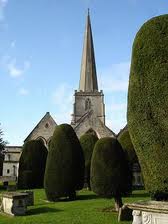
I’m sorry it has been such a long time since my last post. The bronchitis which troubled me recently became so persistent that my GP referred me to a cardiologist. Between the two of them, I have undergone a range of non-surgical tests to make sure my heart is pumping properly, which I’m happy to say it is. The cardiologist is now going to hand me over to a lung specialist, so there is more fun in store for me. As the weeks progress I am gradually feeling better, and am able to get out and about with no difficulty.
We have been having glorious weather. Yesterday I went on the bus to the lovely little Cotswold town of Painswick. It was for a sad reason: the Requiem Mass of a person who was well-known and highly respected, involved in many interests and remembered with great affection by all who knew her. The small Catholic church was packed for the occasion.
As I made my way to the Catholic church, a wonderful peal of bells rang out from the nearby Anglican parish church. There is something rather magical about the musicality of English church bells. The traditional skill attracts ringers of many faiths and none. I was not surprised to learn during the Mass that the deceased had been a member of the team and that the bells had been rung specially in her honour.
Many of you may know that Painswick Church, pictured above, is one of the most famous in the Cotswolds; beautiful in itself, and famed also for the amazing number of clipped yew-trees in the churchyard. Some have grown so close to one another that they have been allowed to form arches. I seem to recall a saying that every time an attempt is made to count the yews a different total results.
After the Mass, while waiting for the return bus, I found the sun so warm that I took off my coat. I sat on the bench, listening to a blackbird singing from a tree in the churchyard, and enjoying what seemed more like a pleasant summer’s day instead of only the 25th of March, the Feast of the Annunciation, with the clocks still on winter time. An unexpected pleasure on a poignant day.
I hope to post again in a few days’ time, all being well.
Wednesday, 16 March 2011
A Suggestion for Nibblers in Lent: Mini-fasts
Reluctant to commit this to the blogosphere, because I don’t know whether or when my determination will crack. Ah well, here goes.
The usual self-denials for Lent - sweets and so on - are real sacrifices for many of us, and well worth undertaking. But this year, in addition, I thought I might try another little Lenten thing: mini-fasts.
Mini-fasts are really only suitable for nibblers. It’s a very simple idea: a resolution to avoid eating between any particular meal and the next; or to avoid eating anything after the evening meal. Any permutation on this could be offered up: it doesn’t have to be for the whole of Lent, or even for an entire day. It could be, for example, from breakfast to lunch; or on this particular day and not others. It could be tailored to individual needs, and the demands of our daily lives. And each mini-fast could be offered up in its own right.
Just a thought.
The usual self-denials for Lent - sweets and so on - are real sacrifices for many of us, and well worth undertaking. But this year, in addition, I thought I might try another little Lenten thing: mini-fasts.
Mini-fasts are really only suitable for nibblers. It’s a very simple idea: a resolution to avoid eating between any particular meal and the next; or to avoid eating anything after the evening meal. Any permutation on this could be offered up: it doesn’t have to be for the whole of Lent, or even for an entire day. It could be, for example, from breakfast to lunch; or on this particular day and not others. It could be tailored to individual needs, and the demands of our daily lives. And each mini-fast could be offered up in its own right.
Just a thought.
Tuesday, 15 March 2011
The Suffering of the People of Japan

After the bout of bronchitis I mentioned in my last post, I am making a rather slow recovery. My brain is at last starting to focus again, and I hope to post again very soon; but overwhelmingly at present my thoughts are with the poor people of Japan, and the series of calamities that have been bludgeoning them. I am filled with admiration for their dignity in the face of so much horror.
(The picture of Our Lady Of Akita has been copied from the blog of The Impractical Catholic, with my acknowledgments and thanks.)
Subscribe to:
Posts (Atom)